Source GaN Charger for Laptops, Phones, and Tablets
Explore 30 options for the gan charger, featuring 65W and 33W models with dual Type-C and USB ports. Compare specifications for laptops, mobile phones, and tablets, noting features like quick charging and over-current protection from Jiangmen suppliers; compare the available evidence and request quotations based on your requirements.
Key considerations
Products List






Comprehensive Sourcing Guide
65W GaN Charger Sourcing Guide
Gallium Nitride (GaN) technology has fundamentally reshaped the portable power supply market by enabling significantly higher power densities in smaller form factors. For B2B buyers, sourcing these devices requires a nuanced understanding of how semiconductor materials translate into physical product attributes. The observed market data indicates a strong presence of 65W models, which represent the current sweet spot for charging laptops, tablets, and high-capacity smartphones simultaneously. Buyers must recognize that while the core technology is mature, the implementation varies widely across suppliers, particularly regarding thermal management and output stability.
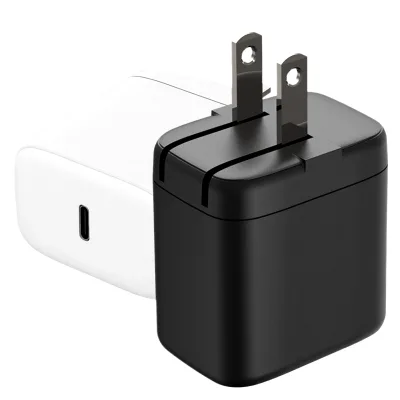
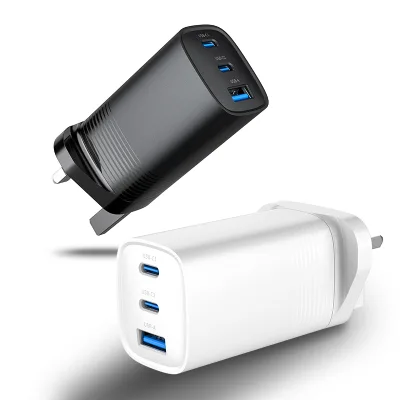
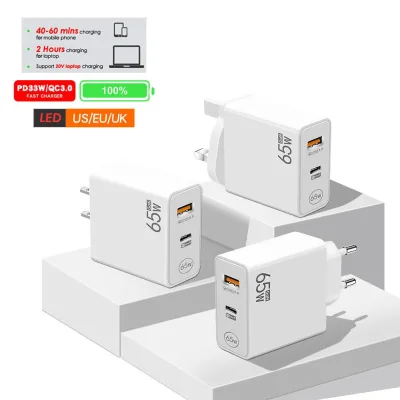
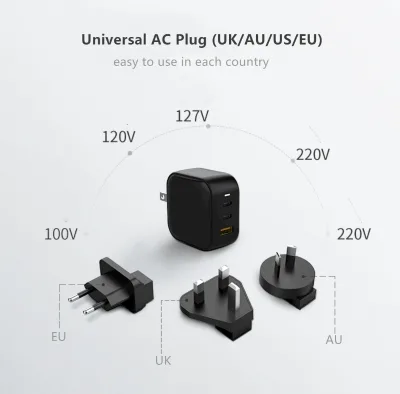
The procurement landscape for GaN chargers is characterized by a high degree of customization and modular design. Suppliers frequently offer options for different plug types, including US, EU, and UK standards, to meet regional regulatory requirements. This flexibility allows buyers to tailor products for specific geographic markets without redesigning the internal circuitry. However, this customization comes with the need for rigorous verification of input and output specifications, as variations in voltage ranges and current limits can impact compatibility with diverse electronic devices.
Product Scope and Observed Listing Signals
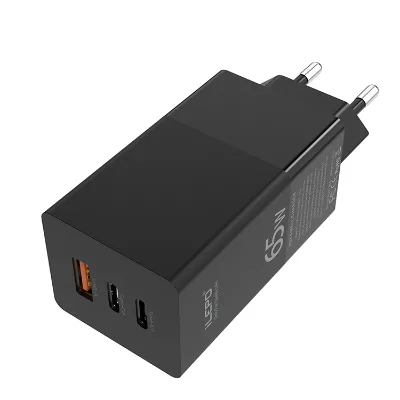
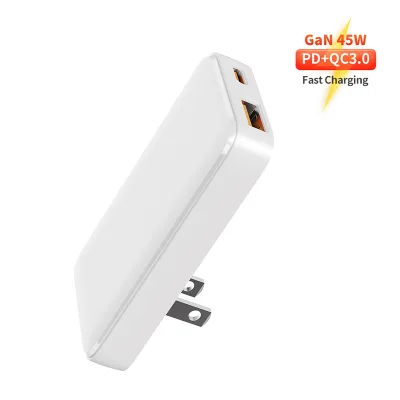
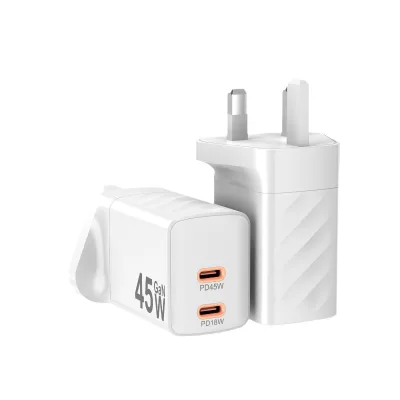
The current market listing signals reveal a diverse range of product configurations, primarily centered around 65W and 33W output capacities. Observed data shows that many units feature dual Type-C ports and at least one USB-A port, supporting simultaneous charging for multiple devices. For instance, specific models demonstrate output combinations such as 45W on one Type-C port and 18W on another, totaling 63W, which highlights the importance of verifying individual port capabilities rather than relying solely on total power ratings. This multi-port architecture is essential for modern workflows where users charge laptops, phones, and wearables concurrently.
Physical specifications and packaging details provide critical insights into logistics and end-user experience. Typical dimensions for these compact chargers hover around 83mm by 43.5mm by 12.8mm, with weights approximately 170g, making them highly portable for travel. Packaging is often standardized in cartons, with single package sizes varying slightly between suppliers, such as 14x8x4 cm or 8.7x14.3x3.5 cm. Buyers should note that while some listings mention "travel" usage, the actual suitability depends on the robustness of the casing and the inclusion of protective features like over-current and short-circuit protection.
Technical Specifications to Verify
Verifying input and output parameters is the most critical technical step in the sourcing process. Buyers must confirm that the input voltage range covers AC 100-240V at 50/60Hz, ensuring global compatibility. On the output side, specifications vary significantly; some models support up to 65W max output, while others are limited to 33W or 27W on USB-A ports. It is essential to check the specific voltage and current profiles, such as 5V/3A, 9V/3A, or 20V/3.25A, to ensure alignment with the target devices’ charging protocols. Mismatches here can lead to slow charging or device incompatibility.
Protocol support and safety features define the functional reliability of the charger. High-quality GaN chargers typically support fast-charging standards like PD 3.0, QC 3.0, FCP, and SCP. Buyers should verify that the device includes comprehensive protection mechanisms, including over-current, over-voltage, and over-charging protection. Additionally, the material composition, often PC fireproof material combined with GaN semiconductors, plays a vital role in heat dissipation and safety. Ensuring that the charger can handle peak loads without thermal throttling is crucial for maintaining performance during extended use.
Compliance and Safety Documentation
Regulatory compliance is non-negotiable for importing electronic goods, particularly power supplies that interact directly with mains electricity. Buyers must request valid certification documents from suppliers, such as CE for European markets or other regional equivalents. While some listings mention CE or RoHS, these should be treated as claims requiring independent verification through accredited testing laboratories. The absence of proper documentation can lead to customs delays, product seizures, or legal liabilities in the destination market.
Safety standards also encompass electrical isolation and leakage current limits, which are critical for user protection. Buyers should inquire about the specific safety standards the product meets, such as IEC 62368-1 for audio/video, information, and communication technology equipment. It is advisable to request test reports that confirm the charger’s performance under abnormal conditions, such as short circuits or overloads. Ensuring that the plug standards match the local infrastructure, whether US, EU, or UK, is equally important to prevent physical incompatibility and electrical hazards.
Cost Drivers and Commercial Terms
Pricing for GaN chargers is influenced by several factors, including output power, port configuration, and the quality of internal components. Observed price ranges in the market vary significantly, reflecting differences in brand positioning and feature sets. Buyers should analyze the cost per watt and compare it against the total package value, including packaging and accessories. High-volume orders may offer economies of scale, but buyers must also consider the minimum order quantities (MOQ), which can range from small batches to larger industrial orders.
Commercial terms extend beyond unit price to include customization costs and logistics expenses. Customization options, such as private labeling or specific color choices, may incur additional fees or higher MOQs. Packaging costs are also a variable, with carton packaging being standard but potentially upgradeable for premium branding. Buyers should negotiate clear terms regarding payment methods, shipping responsibilities, and return policies. Understanding the total landed cost, including duties and taxes, is essential for accurate margin calculation and competitive pricing in the end market.
Supplier Qualification and Quality Control
Supplier qualification begins with assessing their manufacturing capabilities and quality management systems. Buyers should verify the supplier’s location, with many GaN charger manufacturers based in Guangdong, China, a hub for electronics production. It is crucial to confirm whether the supplier owns their molds or relies on third-party manufacturing, as this affects lead times and customization flexibility. Suppliers with in-house production facilities often provide better control over quality consistency and faster response to design changes.
Quality control processes must be rigorously evaluated before placing large orders. Buyers should request samples to test performance, durability, and safety features under real-world conditions. Implementing a pre-shipment inspection protocol is recommended to catch defects early. Suppliers should provide clear documentation of their testing procedures, including burn-in tests and output stability checks. Establishing a clear communication channel for addressing quality issues and defining acceptable defect rates is vital for maintaining product integrity and customer satisfaction.
Long-Term Procurement Checks
Long-term success in sourcing GaN chargers depends on continuous monitoring of market trends and technological advancements. Buyers should stay informed about emerging fast-charging protocols and evolving regulatory requirements that may impact product compliance. Regularly reviewing supplier performance metrics, such as on-time delivery rates and defect frequencies, helps identify potential risks early. Building a diversified supplier base can mitigate supply chain disruptions and provide leverage in negotiations.
Sustainability and end-of-life considerations are increasingly important in the electronics industry. Buyers should inquire about the recyclability of materials and the supplier’s environmental policies. Ensuring that the product lifecycle aligns with corporate sustainability goals can enhance brand reputation. Additionally, maintaining strong relationships with suppliers facilitates access to new product developments and priority support during peak seasons. Proactive engagement with suppliers ensures a steady supply of high-quality, compliant, and innovative GaN chargers.
FAQs
What is the maximum output power of this GaN charger?
The maximum output power is 65W for the charger function. It also supports a power bank output of 22.5W Max. This device features dual Type-C ports and one USB port to handle various charging needs efficiently for laptops and mobile phones simultaneously.
Which devices are compatible with this portable charger?
This charger is designed for laptops, mobile phones, earphones, smart watches, MP3 players, tablets, cameras, and game players. It supports multiple fast charging protocols including PD 3.0, QC3.0, and FCP to ensure compatibility with a wide range of electronic devices globally.
Can I customize the packaging for this GaN charger?
Yes, customization is available for this product. The standard packing is a carton, but buyers can request specific packaging solutions. This flexibility allows businesses to tailor the product presentation to their brand requirements while maintaining the high-quality PC fireproof material construction.
What safety protections are included in this charger?
The charger includes over-current protection, short circuit protection, overvoltage protection, and over-charging protection. These safety features ensure reliable operation and protect connected devices from electrical damage. The unit is constructed from PC fireproof material to further enhance safety during use.
What are the specific output specifications for the Type-C ports?
The Type-C1 and Type-C2 ports support outputs ranging from 3.3V to 21V with currents up to 3.25A. When used together, they can deliver 45W plus 18W for a total of 63W. The USB port offers various voltage and current combinations for standard charging needs.
Where is this GaN charger manufactured and what is the origin?
The product originates from Jiangmen, Guangdong, China. The manufacturing location ensures adherence to specific regional standards. Buyers can expect consistent quality from this origin, which is known for producing reliable electronic components and chargers for the international market.
What is the weight and size of the single package?
The single package size is 14x8x4 cm with a gross weight of 0.147 kg. The product itself weighs approximately 170g and measures 83x43.5x12.8 mm. This compact design makes it highly portable for travelers and daily commuters who need reliable power on the go.